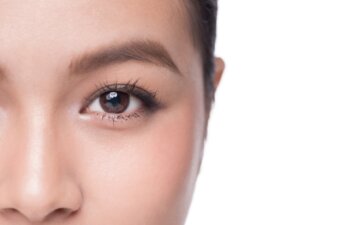
If your upper eyelid feels heavy or looks uneven, it could be from extra skin, a low eyelid margin from ptosis, or both. Upper blepharoplasty removes excess tissue, while ptosis repair focuses on the muscle that lifts your eyelid, so the right procedure depends on what’s causing the problem.
How Can You Tell Excess Skin From Ptosis?
Extra skin on your upper eyelid can fold over your natural crease, so your eyes look hooded or tired. With ptosis, the eyelid margin sits lower than it should and may cover part of your pupil or limit your vision.
You may notice that one eyelid looks lower than the other. During an evaluation, we can determine whether your droopy eyelid is due to skin laxity, weakened eyelid support, or both.
What Does Upper Blepharoplasty Treat?
The American Society of Plastic Surgeons explains that eyelid surgery can address loose upper-eyelid skin, fatty deposits, and folds that may interfere with vision. During upper blepharoplasty, Dr. Cerrati removes or repositions tissue responsible for heaviness and hooding.
Removing excess skin won’t always lift an eyelid margin that’s too low. If ptosis is involved, your surgical plan may also need to improve how the eyelid muscle works.
What Does Ptosis Repair Change?
Ptosis usually occurs when the levator muscle that lifts your upper eyelid weakens or separates from the eyelid. It can affect one or both eyes and may change how your eyes look, how well you see, or both.
During droopy eyelid correction surgery, Dr. Cerrati adjusts or strengthens the muscle that controls how high your eyelid sits. If you also have extra skin, both issues can often be treated in one procedure.
When Should a Drooping Eyelid Be Evaluated?
Schedule an evaluation if you notice:
- One eyelid sitting lower than the other
- An eyelid covering part of your pupil
- Reduced or obstructed vision
- Heaviness that interferes with reading or driving
If your eyelid suddenly droops, especially if you notice double vision or pain, get medical attention right away. It’s important to have any new or unexplained changes checked before moving forward with eyelid surgery.
Why Does the Right Evaluation Matter?
Upper blepharoplasty helps with extra skin and puffiness, and ptosis repair raises the eyelid margin. If ptosis is causing your eyelid to sit low, just removing skin won’t fix the root cause.
Eric Cerrati, MD, FACS, is a double board-certified facial plastic surgeon who focuses on the face and neck. At our Park City and Salt Lake City offices, we evaluate your eyelid position, skin, muscle function, and goals before recommending eyelid surgery in Utah.
FAQs About Droopy Eyelid Surgery
Can ptosis repair improve vision?
If your eyelid margin blocks part of your vision, ptosis repair may help you see better. Your evaluation will show if the drooping affects how your eyes work, how they look, or both.
Can upper blepharoplasty and ptosis repair be performed together?
Yes, Dr. Cerrati can combine both procedures if you have extra upper-eyelid skin and a low eyelid margin. Your anatomy and muscle function help shape the best approach for you.
Find the Right Eyelid Treatment in Utah
If your eyelids feel heavy, uneven, or lower than before, we’re here to help you find out what’s going on. Reach out to Eric Cerrati, MD, FACS, in Park City or Salt Lake City to talk about whether upper blepharoplasty, ptosis repair, or both are right for you.
Medically reviewed by Eric William Cerrati, M.D., FACS on
Posted on behalf of